


Leveraging Innovation to Enhance Emergency and Maternal Care in LREB Counties
Poor maternal outcomes continue to be unacceptably high in the Lake Region Economic Bloc (LREB) and nationally. The maternal mortality ratio is approximately 355 deaths per 100,000 live births nationally, largely due to preventable causes including late referrals and delays in detecting life threatening conditions during pregnancy. Appropriate and well targeted Health Innovations present cost effective and efficient ways of combating the poor maternal and newborn outcomes that continue to plague many communities in Kenya.
Insight Health Advisors (IHA) and the Lake Region Economic Bloc (LREB) are partnering with selected innovators and ecosystem actors to support LREB counties to adopt, invest in, and scale relevant innovations through the mountain model framework.
Emergency medical response and referral systems across many LREB counties face persistent challenges, including fragmented referral pathways marked by poor coordination, poor infrastructure and limited capacity in designing and executing seamless and efficient emergency medical response processes. These challenges result in delays in accessing crucial lifesaving interventions particularly in critical time-sensitive conditions such as trauma, cardiac events, and obstetric emergencies. Hence the region has prioritized the adoption and scaling of Ambulensi emergency care system with support from IHA and the LREB secretariat. Ambulensi is a web-based dispatch system designed and supported by the Emergency Medicine Kenya Foundation (EMKF). This platform enables the set-up of functional emergency call centers and efficient coordination of standardized Ambulance fleets within the public ambulance services in Kenya. The ultimate goal is to facilitate prompt access to critical emergency medical services when and where needed.


In line with these efforts, EMKF with support from IHA conducted a two-day workshop at Kisii Teaching and Referral Hospital to support the development of an Emergency Medical Services (EMS) plan. The workshop brought together key county stakeholders with the aim of strengthening emergency and referral coordination through the establishment of an effective dispatch unit. This initiative is expected to significantly improve emergency services by increasing availability and reducing ambulance turnaround times, enhancing response efficiency.
In another related initiative IHA, in partnership with the Center for Public Health and Development (CPHD), conducted county-innovator engagement visits across several LREB counties, including Kericho County, Nandi County, and Trans-Nzoia County.


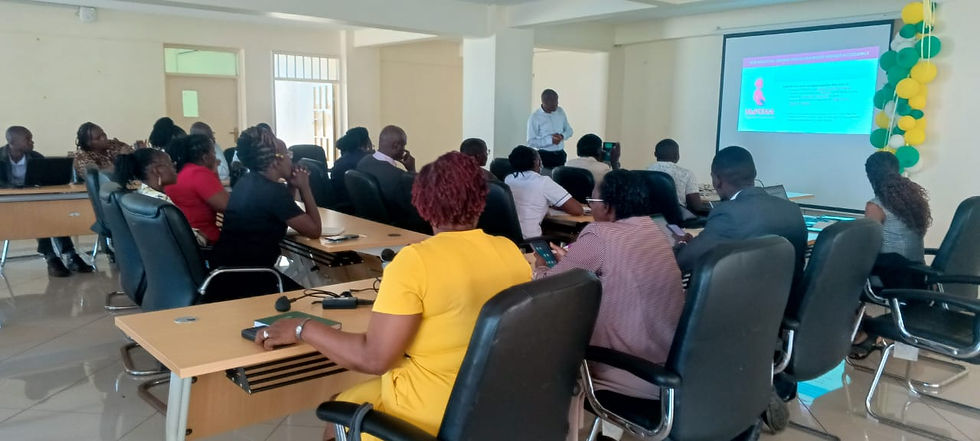
The engagements focused on the MAPEMA AI, an AI-enabled POCUS (point of care ultrasound) selected by eight counties as a key tool for reducing maternal mortality. The expected impact of this technology includes early detection of complications that enable timely referrals and improved clinical decision-making within health facilities. The improved quality of care is also expected to increase antenatal care (ANC) attendance, particularly in sub-county facilities that have had limited access to ultrasound services.
The combined adoption and scaling of Ambulensi and MAPEMA AI innovations is expected to synergistically improve maternal and newborn outcomes through increased access to timely quality care.


Comments